

Return to Flying
Over the winter period, many pilots suffer from a significantly reduced flying rate. This is usually due to a combination of factors such as shorter daylight hours, generally poorer weather, waterlogged airfields and the pressures on our time, such as holiday family commitments. For some, the extended period of shorter days, weather and poor airfield surface conditions may mean they effectively ‘hibernate’ for some months and wait to spend precious time and money when flying can be more assured. The average UK permit aircraft flies just under 30 hours a year, and many of those will be around a spring/summer flying season.
As we approach Spring and the daylight hours start to increase, the incessant rain and grey overcast seems to start to be more interspersed with some blue sky and temperatures start becoming more comfortable again. It’s at this time of year that our thoughts will probably start to turn to flying again, and perhaps planning what we hope to achieve in the coming flying season. With this in mind, now is a good time to think through some things we can do to help us have a safe and enjoyable return to flying.
Planning for the return
It’s all about preparation and planning at this stage, and to help us get safely back into the air and to efficiently get through what sometimes seems like a mountain of things to do, we can organise all of our preparation under three broad headings: Pilot, Plane and Profile. Click on the plus signs below to expand each section.
-
If you haven’t flown very much over the winter months, then the more preparation you can do, the easier it will be when you get back into the cockpit. This may involve quite a lot of work, because those checks and type knowledge you had become really familiar with may have faded, and the things that you could previously do without thinking, will actually require some require deeper thought. All of this can reduce your capacity, so aim to put aside some time to make sure you can prepare before the day of your flight.
The first place to start is to dig out your licence and logbook and check your legal status:
Licence
• Is it in date? (Most are now for life, but some may still have expiry dates)
• Is it valid for the flying you want to do? (Check changes post-Brexit for things like using a LAPL abroad)
Ratings
• Is the class rating(s) in date? If it has expired you will need to seek retraining and a proficiency check with an Examiner.
• If you are a LAPL pilot you have class privileges – not an expiry date – and you need to check you comply with LAPL recency requirements on the day of your flight or seek supervision to fly from a qualified instructor.
• Is the IMC or IR rating in date if you plan to fly in IMC?
Medical
• Check the expiry date of your medical or PMD and any other applicable requirements such as ECG or audiology requirements if relevant.
• If you have had any changes to your health or worries about your fitness to fly, seek the advice of an Aviation Medical Examiner.
Currencies
• If you intend to take passengers, ensure you have the required 3 landings and take-offs within the last 90 days on the relevant class. One of these must be at night if you intend to take passengers at night unless you hold a full IR.
• Flying clubs or schools may mandate their own currency requirements and the need to fly with an instructor for a ‘currency check’.
(There is a derogation for some national licence holders to fly with qualified pilots as passengers, but it is recommended to check this carefully and consider any Human Factors pressures this may bring).
The next area of focus is the flight manual. When was the last time you looked at it? Have a read, remind yourself what you should be doing, what are the critical speeds and figures, and review how to fly certain profiles and procedures. If your aircraft does not have a formal flight manual, you may wish to revise any other notes or guidance you have hopefully collated for your type.
Do you learn your checks off by heart, or use a checklist? Whichever one it is, re-familiarise yourself with the required checks and the ‘flow’ of checks around your particular cockpit controls. What about emergency procedures? How familiar are you with those? Have a read through them and identify what critical actions there are that you should commit to memory. Pick an emergency drill, run through the actions, and then think about what you would actually do if that emergency happened to you. Think through your actions if this were to happen on takeoff, landing or in the circuit. Where would you point the aircraft, what speeds would you fly, what would you say on the radio?
Now you’ve reviewed the rules, procedures and the checklist, it’s time to get your personal kit checked. This could be a great time to have a clear out and review of your flying bag – make sure you have all your required charts, iPad or tablet and other such flying equipment. Check that your charts are in date and make sure you update any navigation software/apps to the latest version. Make sure you re-familiarise yourself with the software - are the overlays set up correctly? what about the various alerts? Are they switched on and parameters set to what you are expecting? It is vital to spend some time refamiliarising yourself well before you go anywhere near the aircraft. Finally, have a look through any other kit you may have such as headsets and torches - are they still working or are the batteries dead? It’s generally a good idea to put a fresh set of batteries in anyway.
Finally, what about you as a person? Do you have any new medical issues? Is your medical in date? how are you feeling about preparing for your first flight back? A little bit anxious if you haven’t flown for a while is quite normal. However, hopefully by preparing thoroughly, that anxiety will reduce, and you will be more confident as you approach the day of flight.
As can be seen, there is already a lot to do! Planning ahead to spend some free evenings or weekend time on this will be time well spent before getting close to flying and will hopefully leave you feeling confident and more personally prepared.
-
The aircraft may not have flown for the same amount of time as you. It may be a rental aircraft and in good use, but equally it could be your own aircraft, or you own a share in one and it could have been flown a lot less.
No matter when the aircraft was last flown, it is important that a detailed pre flight inspection is carried out. Take your time and allow plenty of time to not only reacquaint yourself with the aircraft and the pre-flight checks, but also to really look at what you are checking.
Remember normalisation of deviance where, over time we end up doing things completely differently than the approved method because we develop short cuts or cut corners. This is a good opportunity to have a look at what you do and perhaps recalibrate yourself to doing those checks properly. Perhaps you should be doing the fuel drains diligently rather than assuming it will be ok as you refuelled recently? It will take time, and potentially a little more time than you think, so plan to leave good time for the pre-flight checks prior to flying. Although you may be familiar with doing the pre-flight from memory, perhaps for the first time it is an idea to use the checklist to make sure you are not missing any items?
If the aircraft hasn’t been flown for a while, you may have to do some detailed technical recovery. If that is the case the LAA provide a wealth of information on how to do this. One of their technical leaflets in particular is a great guide and you can find the link in the further reading at the end of this article.
-
Returning to flying is also a great opportunity to stop any normalisation of deviance that may have built up over the last flying period by reading the actual aircraft speeds and procedures (rather than relying on what you can remember), the actual airfield procedures, or some of the flying rules and regulations that we should really know, but often don’t get time to read. Reading the latest versions of key documents at least once a year is a good way to keep yourself current with rules, regulations and procedures so take the time to revise these.
In terms of your flight profile, it is a good idea to revise the airfield procedures and local airspace – has it changed since the last time you flew? Has the taxi pattern changed? Are the departure and arrival procedures the same or are they all the same, but you weren’t previously flying them exactly as you should have been? It is also worth checking if the airfield has any new infrastructure, markings or work in progress that may affect previously well-known procedures.
Finally, think about that first flight back. Should you be heading off on a solo landaway to Scotland in poor weather having not flown for four months? Or maybe a local area refresher, some skills work such as stalling and steep turns followed by circuits might be more appropriate. The latter gives you the opportunity to brush away those cobwebs and refresh yourself on the basics in a low pressure, familiar environment before trying to tackle any more challenging flying.
Pre-flight planning is a key aspect of any flight and if you have been away from flying for a while, elements of this can often be overlooked or rushed. Consider the weather, the flight profile, airspace, NOTAMS and procedures. Some people sometimes take the time to sit down and ‘armchair’ fly the flight, visualising what you will do at each stage and how to fly different aspects of it. This can be particularly beneficial if you haven’t flown for a while – perhaps also consider if you can use something such as a picture of the cockpit layout so you can remember where all the controls and switches are.
Something worth considering in all this is the use of a preflight checklist. We were delighted to recently collaborate with Jon Hunt, the Flying Reporter to produce a pre-flight checklist to help all pilots with their pre-flight prep whether you have been off flying for the winter, or you fly regularly. Jon has produced a video on pre-flight prep, you can also download the checklist – see the links in the further reading below.
Getting airborne again – what are the Threats?
Many of you will have hopefully heard of Threat and Error Management (TEM) – as a reminder:
Threats and errors have the potential to cause undesired aircraft states, and when they do so, those states must be managed. A foundation of TEM is the acceptance that threats will occur and errors will be made. Hence TEM is not an attempt to eliminate threats and errors, but is concerned with the management of them.

We are trying to pre-think about what threats could result us in making errors, and perhaps by taking some precautions we can mitigate the chance of those leading to us have an incident or accident on our flights. So, what could potentially be the top three threats that can catch us out after having a break from flying?
Threat #1 - ‘Rusty’ handling skills
If we are ‘rusty’ in our aircraft handling, it makes us more at risk of a loss of control event like a stall spin incident, a landing runway excursion or loss of control in bad weather. As part of your pre-flight reading, be sure to revise speeds and handling procedures. One thing you may like to do is use some personal ready reference guides for key areas of flight like the circuit to remind you of speeds and power settings. Perhaps take some time to design your own for your type? Here is an example of one that we use for a PA28:

When you do get to fly, it is a good idea to invest some time in refreshing and practising key handling skills. You may like to think about how often you have flown things like:
· Steep turns
· Standard Stall Recovery
· Practice Forced Landing
· Circuits, including touch and go
· Go Arounds
· Emergencies such as practice EFATO, simulated rough running or precautionary landing.
Perhaps you could create a personal currencies card or log that you can keep in your logbook to keep track of when you last did these things and use it to help maintain a periodicity you feel comfortable with? An example you can download is here. Remember if in any doubt about how to fly certain manoeuvres or if you are not feeling confident about something, seek the advice of a suitable instructor who is qualified and current on your aircraft type/class.
There is lots of reading on loss of control and things to think about on the website – see links below in further reading.
Threat #2 – Your Capacity Bucket overflowing…
Let’s imagine our capacity or stress bucket. Our bucket or ability to carry out flying is a certain size. Stress flows in with things like passengers, RT demands, weather, remembering checks and so on.
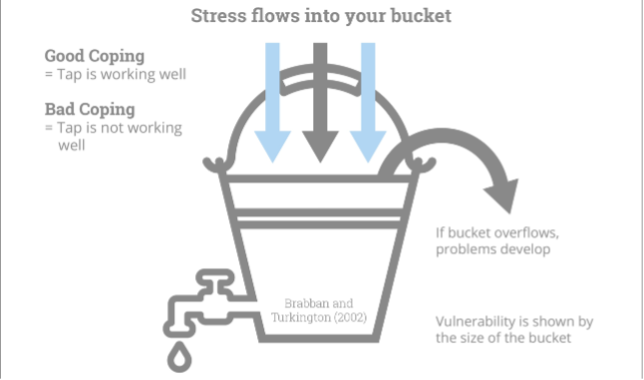
Normally our tap is open because we are current, on top of our game and remember checks and things easily. However, if we have limited recency our tap could become closed resulting in the level in our bucket is being quite high before we even start the flight.
All this means we have limited capacity left to cope with the unexpected and any extra inputs and demands should they happen. Would you have enough capacity in your bucket to cope with a rough running engine on your first flight back after 4 months? Therefore, anything you can do to keep your stress bucket level low before those first flights back, such as preparation and planning will really help you. Other things such as keeping the flight profile simple for first few flights back, not taking demanding passengers and making sure weather isn’t going to be challenging will also help. Finally, things such as such as routines, standard operating procedures and, as discussed earlier, checklists can be great for capacity building and keeping that stress level low.
Threat #3 – You Don’t Know what you Don’t Know…
As mentioned during our pre-flight revision, it is vitally important that we need to keep up to date with changes in airspace, procedures and regulations. This could be at your local airfield or a national procedure change. Make sure you are using sky wise and skyway code to get latest info and keep up to date. The Skyway code is a great refresher read and can be downloaded free and is very easy to read with easy to navigate bookmarks.
Leave plenty of time for pre reading and use source documents (such as CAPs) or high-quality internet resources - don’t always trust club room talk or Internet forums. Social media can be really supportive but beware of people who may not be all they seem or claim and try to make use of free webinars and training resources, but always make sure you have the correct information relevant to you and your particular aircraft type.
Summary
The first flight back after a period of time off can be quite daunting. You can really help yourself by leaving enough time to prepare and plan for the flight whilst also ensuring that the first flight back isn’t overly complicated and provides you with a good refresher in the basics before tackling any more challenging scenarios. Check out the further reading below:

Additional reading:
https://www.caa.co.uk/general-aviation/safety-publications-and-information/the-skyway-code/
https://www.astralaviationconsulting.com/gasafetyresources/preflight-planning-checklist
CAA Safety Sense leaflets:
http://publicapps.caa.co.uk/modalapplication.aspx?appid=11&mode=list&type=sercat&id=21